
As AI technology reshapes the music industry, understanding its implications on copyright law becomes crucial for musicians and producers. With entities like Anthropic collaborating with major players such as Universal Music Publishing, Concord Music Group, and ABKCO, known for their association with The Rolling Stones, questions arise about whether AI-generated music constitutes a derivative work.…
Derivative works in the context of AI music refer to creations that are based on existing works, where the AI utilizes pre-existing music elements to generate new compositions. This concept is crucial for understanding how copyright law applies to music produced with AI technology.
For instance, if an AI system analyzes classical music compositions to create a new piece that retains recognizable elements from those originals, it may be classified as a derivative work. This classification raises important questions about ownership, rights, and the legal implications for both the AI developers and the original creators.
Copyright plays a pivotal role in defining the legal boundaries for AI-generated music, particularly in determining whether such works can be protected under existing laws. Understanding these implications is essential for artists and producers navigating this evolving landscape.
As AI technology continues to advance, legal experts are examining how copyright laws can adapt to include AI-generated works. For example, the U.S. Copyright Office has begun to address these issues, prompting discussions about whether AI can be considered an author or if the human operators behind the AI hold the rights to the music produced.
Case studies on collaborations between AI entities and major music publishers provide valuable insights into the practical applications of derivative works in the music industry. These examples illustrate how AI is being integrated into music production while navigating copyright challenges.
One notable case involves the collaboration between Anthropic and Universal Music Publishing, showcasing how AI can generate music that resonates with audiences while also adhering to copyright regulations. Such partnerships highlight the potential for innovation in music creation while raising questions about the distribution of rights and profits.
The future of AI in music copyright is a topic of significant interest as technology continues to evolve. As AI-generated music becomes more prevalent, the legal framework surrounding it must also adapt to address new challenges and opportunities.
Industry experts predict that we may see new legislation specifically addressing AI-generated works, which could redefine the concept of authorship and ownership in music. This evolution could lead to more equitable solutions for artists and AI developers alike, ensuring that all parties are recognized and compensated for their contributions.
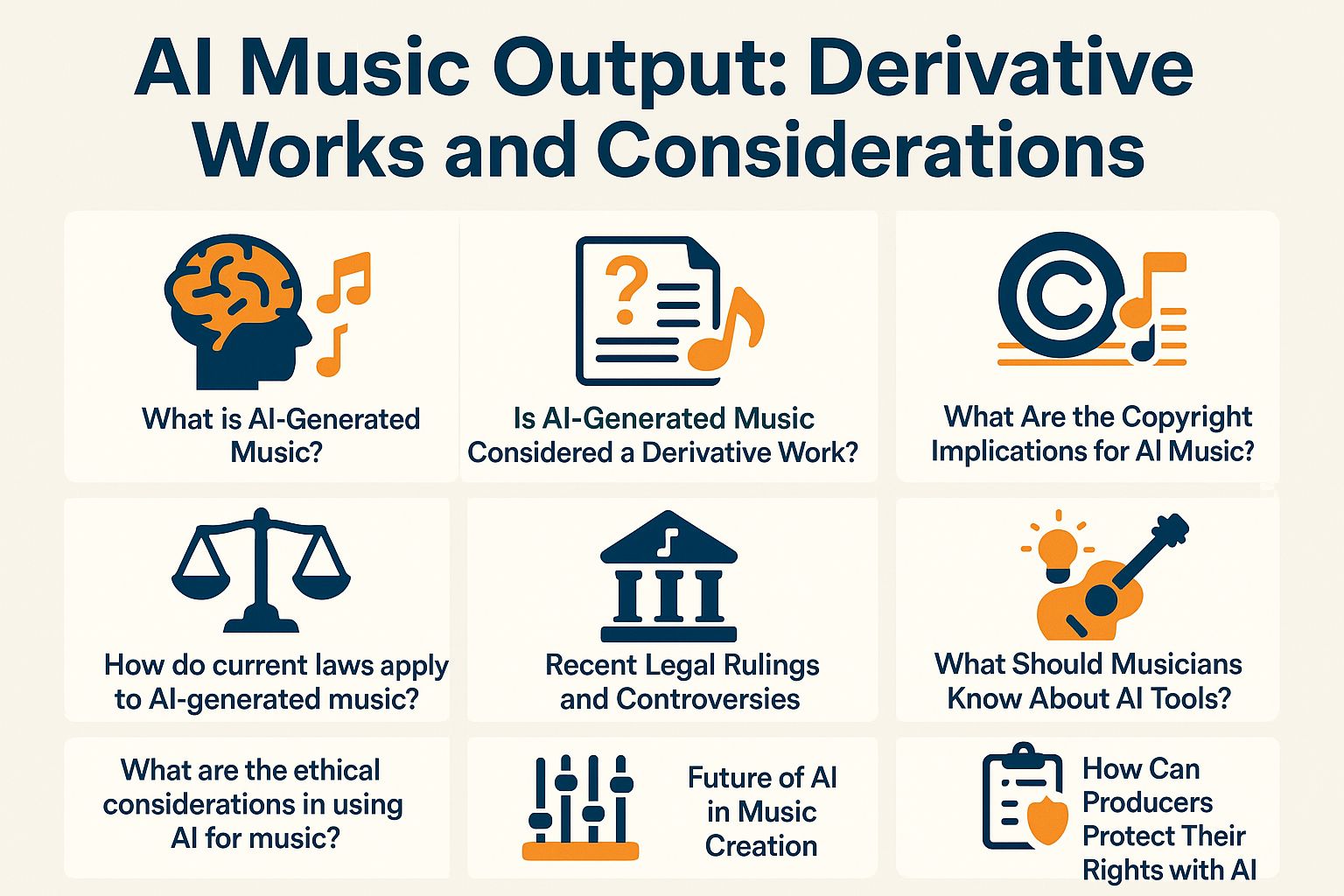
Derivative works in the context of AI music refer to creations that are based on existing works, where the AI utilizes pre-existing music elements to generate new compositions. This concept is crucial for understanding how copyright law applies to music produced with AI technology.
For instance, if an AI system analyzes classical music compositions to create a new piece that retains recognizable elements from those originals, it may be classified as a derivative work. This classification raises important questions about ownership, rights, and the legal implications for both the AI developers and the original creators.
Copyright plays a pivotal role in defining the legal boundaries for AI-generated music, particularly in determining whether such works can be protected under existing laws. Understanding these implications is essential for artists and producers navigating this evolving landscape.
As AI technology continues to advance, legal experts are examining how copyright laws can adapt to include AI-generated works. For example, the U.S. Copyright Office has begun to address these issues, prompting discussions about whether AI can be considered an author or if the human operators behind the AI hold the rights to the music produced.
Case studies on collaborations between AI entities and major music publishers provide valuable insights into the practical applications of derivative works in the music industry. These examples illustrate how AI is being integrated into music production while navigating copyright challenges.
One notable case involves the collaboration between Anthropic and Universal Music Publishing, showcasing how AI can generate music that resonates with audiences while also adhering to copyright regulations. Such partnerships highlight the potential for innovation in music creation while raising questions about the distribution of rights and profits.
The future of AI in music copyright is a topic of significant interest as technology continues to evolve. As AI-generated music becomes more prevalent, the legal framework surrounding it must also adapt to address new challenges and opportunities.
Industry experts predict that we may see new legislation specifically addressing AI-generated works, which could redefine the concept of authorship and ownership in music. This evolution could lead to more equitable solutions for artists and AI developers alike, ensuring that all parties are recognized and compensated for their contributions.