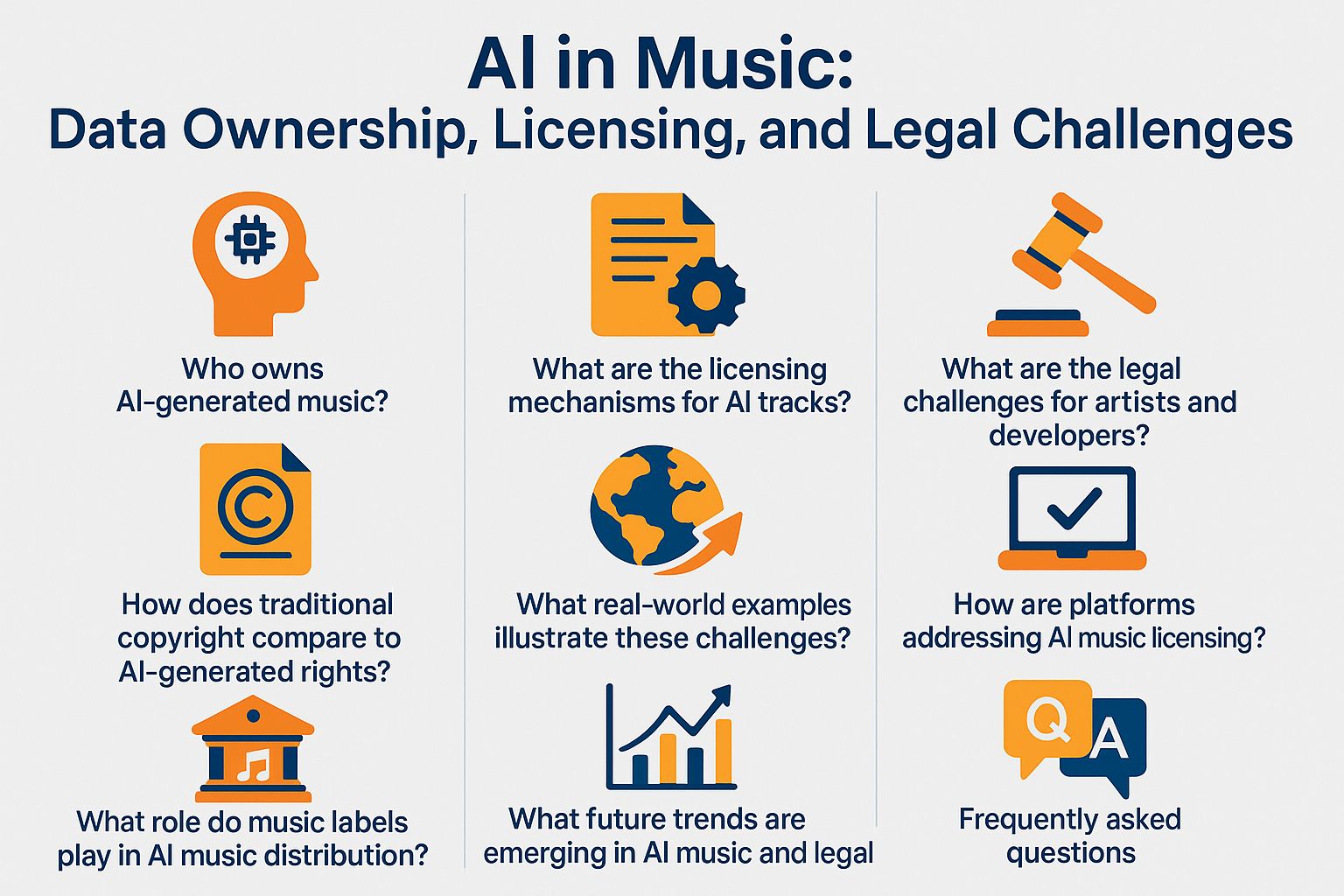
The Impact of AI on Music Ownership
The rise of AI technology in music creation has significantly altered the landscape of music ownership. As AI-generated compositions gain popularity, traditional notions of authorship and copyright are challenged, leading to a reevaluation of legal frameworks that govern music rights.
For instance, when an AI system composes a song, questions arise regarding who holds the copyright—the programmer, the user, or the AI itself. This complexity necessitates new legal interpretations and potential reforms to ensure that artists and creators are fairly compensated while adapting to technological advancements.
Understanding Licensing in AI-Generated Music
Licensing is a crucial aspect of the music industry, particularly as it pertains to AI-generated works. Proper licensing ensures that creators can monetize their music while respecting the rights of original artists and producers.
With AI tools producing music at an unprecedented rate, licensing agreements must be clear and comprehensive. For example, platforms that utilize AI music generation often require specific licenses to distribute or sell these works, highlighting the need for transparency and adherence to copyright laws in the digital age.
Legal Challenges Faced by Artists
As the intersection of AI and music evolves, artists encounter various legal challenges, particularly concerning ownership rights and royalties. These challenges can hinder their ability to protect their work and receive fair compensation.
One prominent issue is the ambiguity surrounding the attribution of AI-generated music. Artists must navigate a complex web of legalities to assert their rights, often requiring legal counsel to address disputes over ownership and royalties, making it essential for them to stay informed about current laws and regulations.
Future Trends in Music and AI Integration
The integration of AI in the music industry is expected to continue evolving, influencing how music is created, distributed, and consumed. As technology advances, so too will the legal frameworks that govern these changes.
Emerging trends indicate a growing need for innovative licensing models and clearer definitions of ownership concerning AI-created works. As artists and technologists collaborate, the future of music ownership will likely require adaptive strategies to ensure that both human creativity and AI contributions are recognized and protected.