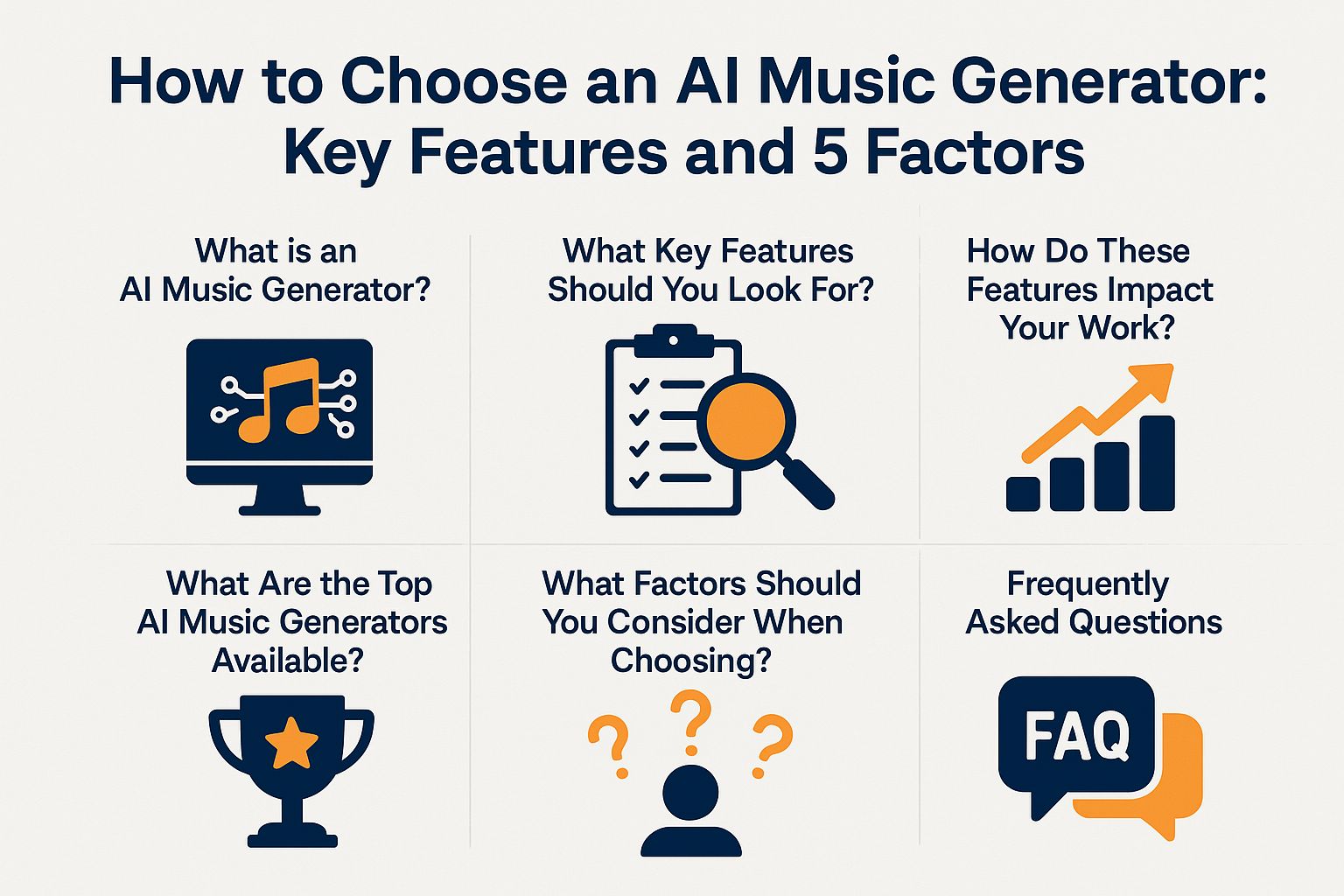
In the rapidly evolving music industry, choosing the right AI music generator can be overwhelming. Whether you’re a seasoned music producer or a hobbyist exploring your creativity in music creation, using AI-powered platforms can be challenging. This guide breaks down essential features. These include stem separation, audio quality, and ease of use. It helps you…
AI music generation involves the use of artificial intelligence technologies to create music autonomously or assist human composers. This innovative approach allows for the exploration of new sounds and styles that may not be easily achievable through traditional methods.
For instance, AI algorithms can analyze vast datasets of music to learn patterns and structures, enabling them to generate original compositions. Tools like OpenAI's MuseNet and Google's Magenta are prime examples of how AI can be harnessed to produce unique musical pieces across various genres.
As of 2025, several AI music generators stand out in the industry due to their advanced capabilities and user-friendly interfaces. These tools cater to different needs, from hobbyists to professional musicians, making them accessible to a wide audience.
Notable examples include AIVA, which specializes in composing classical music, and Amper Music, which allows users to create custom tracks quickly. Each of these tools offers unique features, such as customizable styles and collaborative options, enhancing the music creation experience.
AI music generators provide numerous advantages for musicians and creators, including efficiency, inspiration, and accessibility. By automating certain aspects of music production, these tools can significantly reduce the time and effort required to create high-quality music.
Moreover, they can serve as a source of inspiration, helping artists overcome creative blocks by suggesting melodies or harmonies. For example, a songwriter might use an AI tool to generate a chord progression, which they can then build upon to create a full song.
When selecting an AI music generator, it's essential to consider factors such as the intended use, available features, and the learning curve associated with the software. Users should evaluate how well the tool aligns with their specific needs and skill levels.
For instance, a beginner might prioritize an intuitive interface and tutorials, while a professional may seek advanced features like MIDI export and customization options. Understanding these aspects can help users make informed decisions that enhance their music creation process.
AI music generation involves the use of artificial intelligence technologies to create music autonomously or assist human composers. This innovative approach allows for the exploration of new sounds and styles that may not be easily achievable through traditional methods.
For instance, AI algorithms can analyze vast datasets of music to learn patterns and structures, enabling them to generate original compositions. Tools like OpenAI's MuseNet and Google's Magenta are prime examples of how AI can be harnessed to produce unique musical pieces across various genres.
As of 2025, several AI music generators stand out in the industry due to their advanced capabilities and user-friendly interfaces. These tools cater to different needs, from hobbyists to professional musicians, making them accessible to a wide audience.
Notable examples include AIVA, which specializes in composing classical music, and Amper Music, which allows users to create custom tracks quickly. Each of these tools offers unique features, such as customizable styles and collaborative options, enhancing the music creation experience.
AI music generators provide numerous advantages for musicians and creators, including efficiency, inspiration, and accessibility. By automating certain aspects of music production, these tools can significantly reduce the time and effort required to create high-quality music.
Moreover, they can serve as a source of inspiration, helping artists overcome creative blocks by suggesting melodies or harmonies. For example, a songwriter might use an AI tool to generate a chord progression, which they can then build upon to create a full song.
When selecting an AI music generator, it's essential to consider factors such as the intended use, available features, and the learning curve associated with the software. Users should evaluate how well the tool aligns with their specific needs and skill levels.
For instance, a beginner might prioritize an intuitive interface and tutorials, while a professional may seek advanced features like MIDI export and customization options. Understanding these aspects can help users make informed decisions that enhance their music creation process.