
As the music industry evolves, understanding AI music generators and tools is essential for artists, producers, and enthusiasts. This article explores the innovative tools and techniques shaping song creation and AI creativity in 2025, from Auto-Tune enhancements to advanced algorithms, including AI learning and music education solutions. We’ll delve into how these AI tools are…
AI music generation refers to the use of artificial intelligence algorithms to create music compositions. These systems analyze vast amounts of musical data to learn patterns and styles, enabling them to generate original pieces that mimic human creativity.
For example, tools like OpenAI's MuseNet and Google's Magenta have demonstrated the capability to compose music across various genres, from classical to contemporary pop. By leveraging machine learning techniques, these AI systems can produce music that resonates with listeners, making them valuable assets for artists and producers alike.
As of 2025, several AI music tools have gained popularity among musicians and content creators. These tools vary in functionality, from composition and arrangement to mixing and mastering, catering to different aspects of music production.
Some notable examples include AIVA, which specializes in composing soundtracks, and Amper Music, which allows users to create custom tracks quickly. These platforms provide intuitive interfaces that enable users, regardless of their technical expertise, to harness the power of AI in their music projects.
The integration of AI in music creation has transformed how artists approach songwriting and production. AI tools not only enhance creativity but also streamline workflows, allowing musicians to focus more on their artistic vision.
Research indicates that AI-generated music is becoming increasingly accepted in various industries, including film, advertising, and gaming. This shift highlights the growing collaboration between human artists and AI systems, paving the way for innovative soundscapes that blend technology with traditional artistry.
The future of AI music technology is poised for significant advancements, with ongoing research and development aimed at improving the capabilities of AI systems. Emerging trends suggest a focus on enhancing personalization and interactivity in music generation.
For instance, future AI tools may incorporate user feedback to refine compositions in real-time, creating a more tailored music experience. Additionally, advancements in neural networks and deep learning are expected to produce even more sophisticated music that closely resembles human creativity, further blurring the lines between AI and traditional music-making.
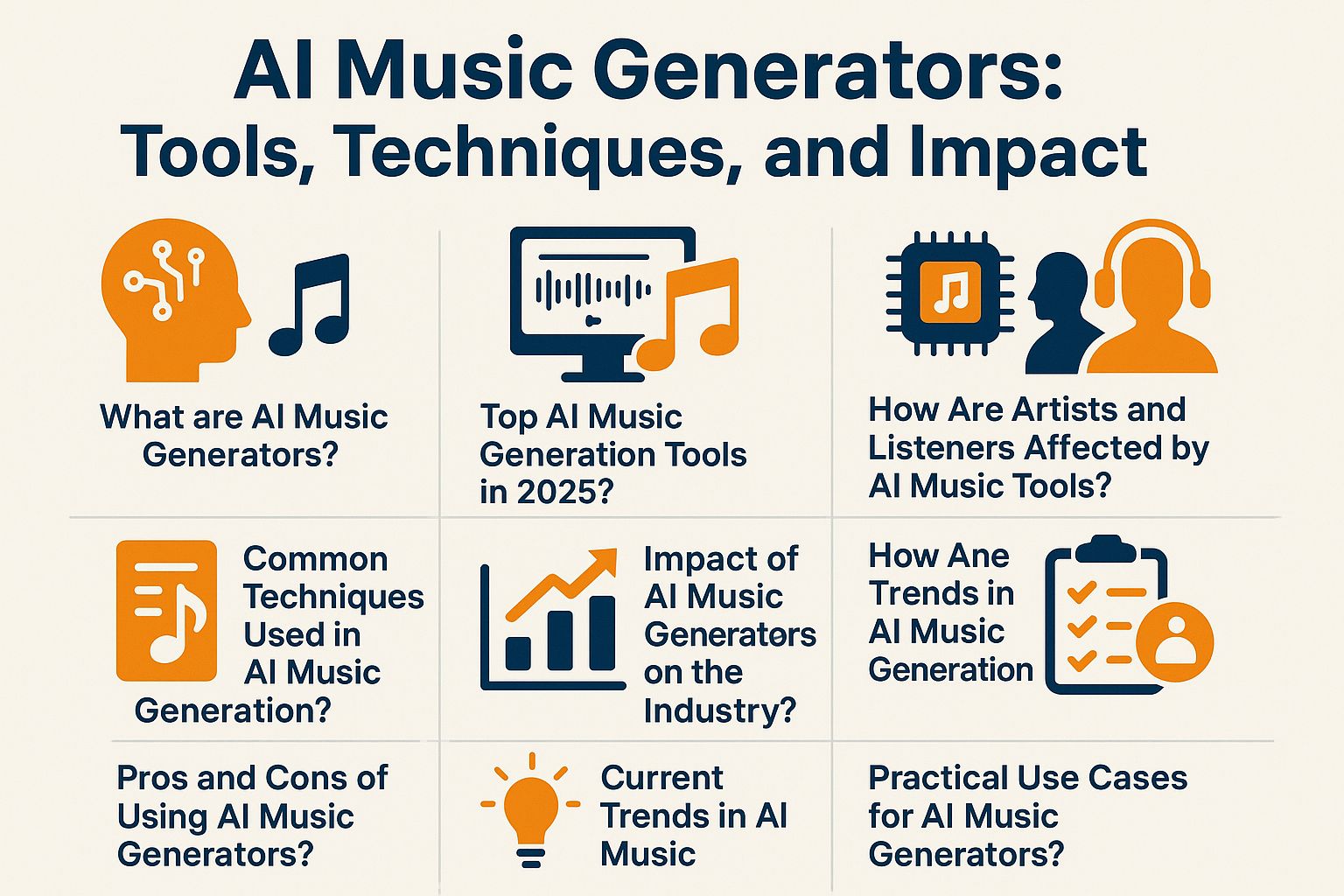
AI music generation refers to the use of artificial intelligence algorithms to create music compositions. These systems analyze vast amounts of musical data to learn patterns and styles, enabling them to generate original pieces that mimic human creativity.
For example, tools like OpenAI's MuseNet and Google's Magenta have demonstrated the capability to compose music across various genres, from classical to contemporary pop. By leveraging machine learning techniques, these AI systems can produce music that resonates with listeners, making them valuable assets for artists and producers alike.
As of 2025, several AI music tools have gained popularity among musicians and content creators. These tools vary in functionality, from composition and arrangement to mixing and mastering, catering to different aspects of music production.
Some notable examples include AIVA, which specializes in composing soundtracks, and Amper Music, which allows users to create custom tracks quickly. These platforms provide intuitive interfaces that enable users, regardless of their technical expertise, to harness the power of AI in their music projects.
The integration of AI in music creation has transformed how artists approach songwriting and production. AI tools not only enhance creativity but also streamline workflows, allowing musicians to focus more on their artistic vision.
Research indicates that AI-generated music is becoming increasingly accepted in various industries, including film, advertising, and gaming. This shift highlights the growing collaboration between human artists and AI systems, paving the way for innovative soundscapes that blend technology with traditional artistry.
The future of AI music technology is poised for significant advancements, with ongoing research and development aimed at improving the capabilities of AI systems. Emerging trends suggest a focus on enhancing personalization and interactivity in music generation.
For instance, future AI tools may incorporate user feedback to refine compositions in real-time, creating a more tailored music experience. Additionally, advancements in neural networks and deep learning are expected to produce even more sophisticated music that closely resembles human creativity, further blurring the lines between AI and traditional music-making.