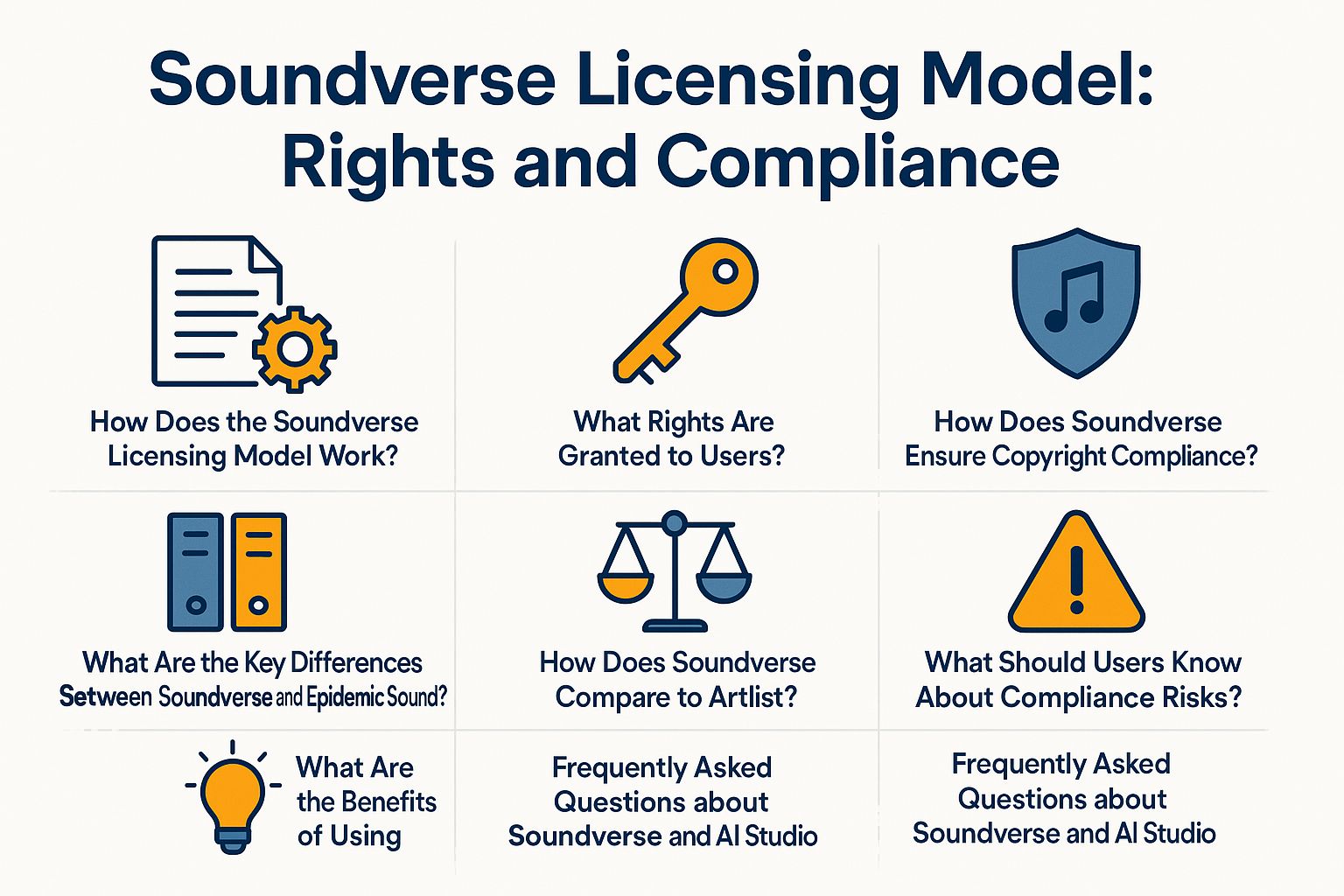
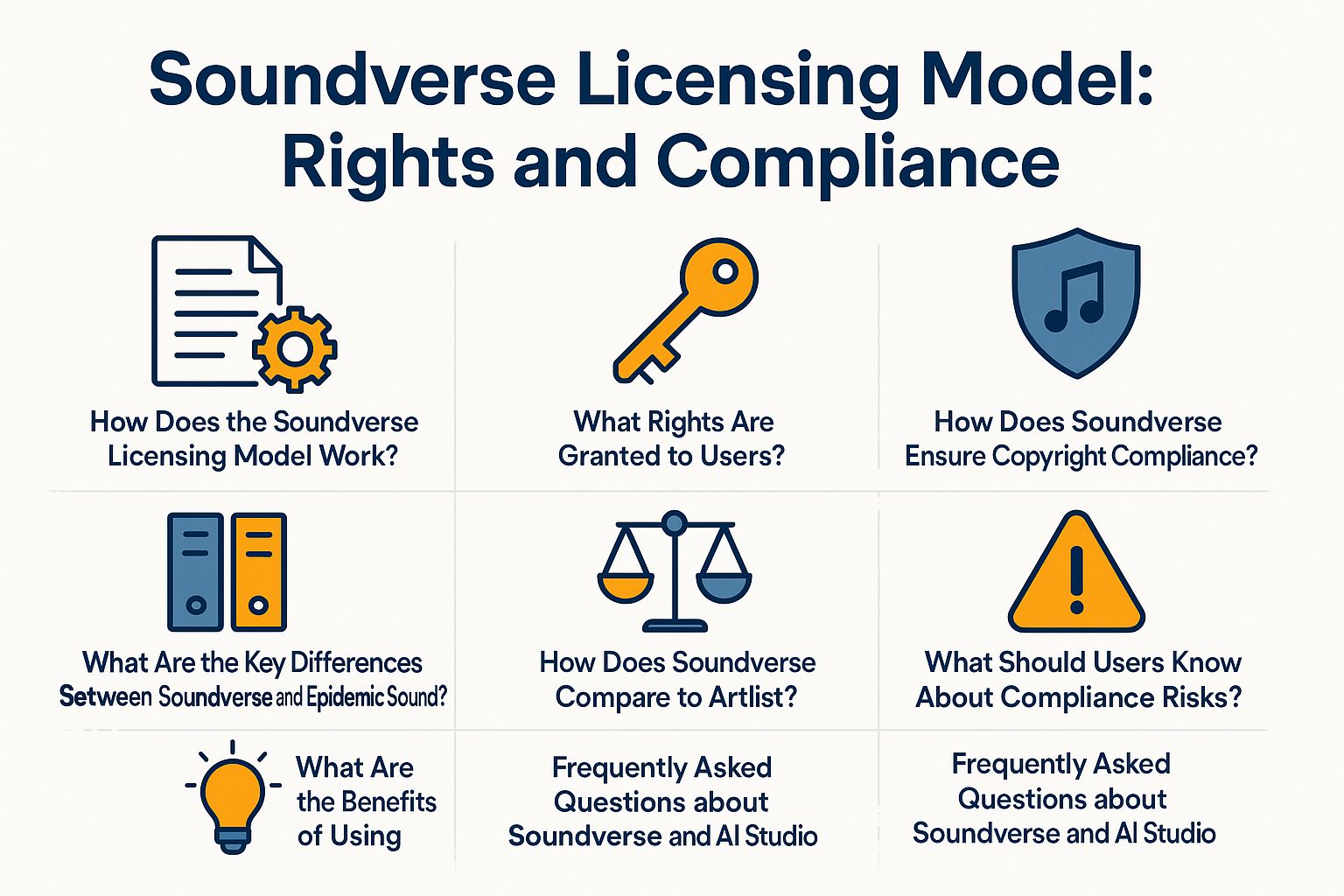
Understanding licensing is crucial for AI filmmakers and music producers. This article explores copyright compliance, U.S. Copyright Office guidelines, and compares Soundverse with Epidemic Sound, AudioJungle, and Artlist. Equip yourself with the knowledge to navigate copyright recognition, understand music licensing, and ensure your creative endeavors remain compliant.
Key Takeaways:Soundverse offers a variety of licensing types to fit different user needs and purposes.Users have specific rights for both commercial and personal use, ensuring they have the proper permissions for their projects.Soundverse prioritizes copyright compliance, implementing monitoring and enforcement to protect artists and users.
Understanding the Soundverse Licensing Model
A comprehensive understanding of the Soundverse licensing model is essential for content creators aiming to utilize AI-generated music and AI-powered filmmaking, as it delineates the parameters for both commercial and personal use.
Overview of Licensing Types
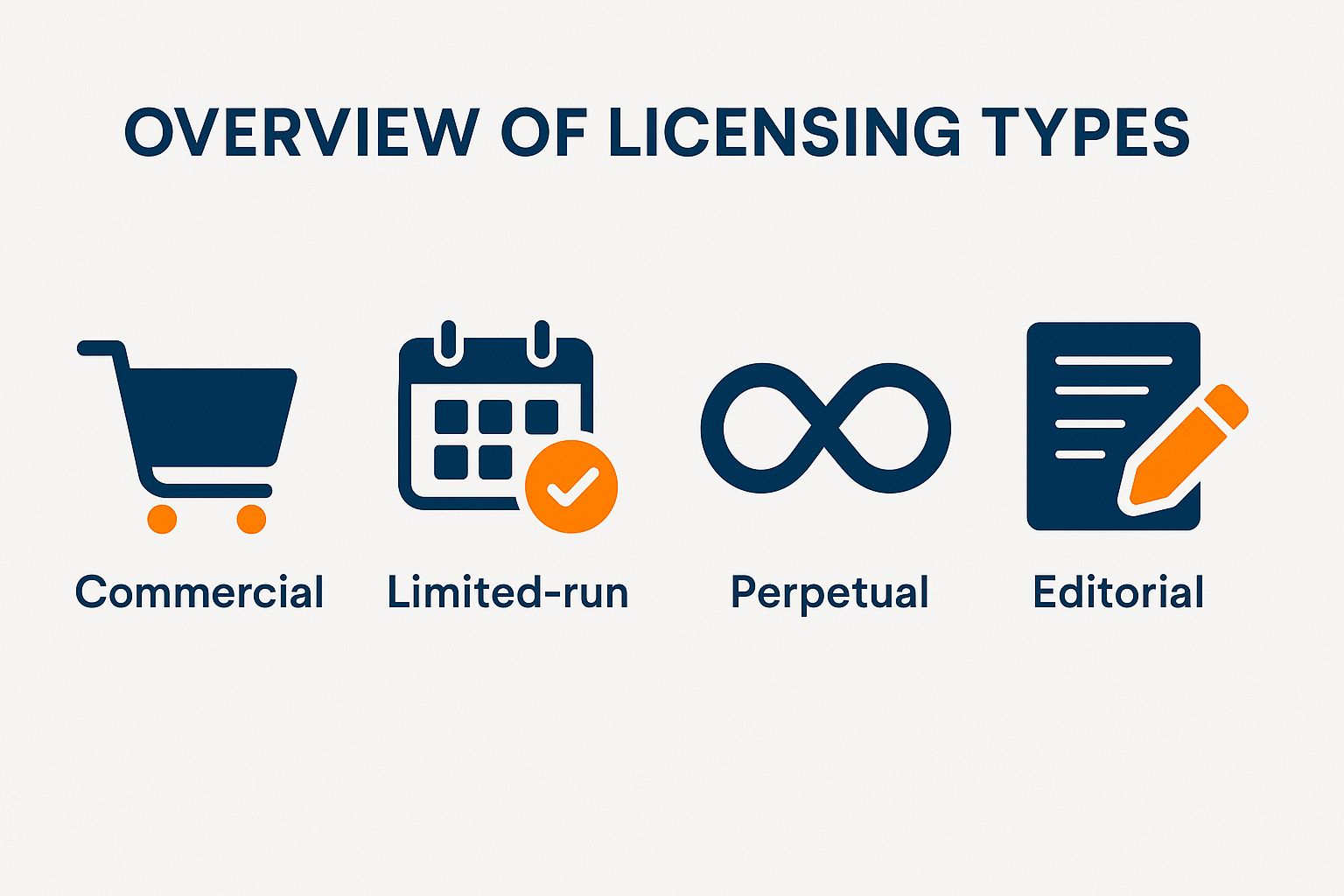
Soundverse offers distinct licensing types for commercial and personal projects, providing flexibility for diverse content creators using AI tools. The two primary licensing types are commercial use and personal use.
A commercial license is particularly suitable for projects intended for profit, such as marketing campaigns or products intended for sale. For example, utilizing Soundverse assets in a promotional video for a business falls under commercial use.
Conversely, a personal use license is tailored for non-profit projects, such as personal blogs or hobbyist videos. This distinction affects user rights; commercial licensees have broader permissions, including resale rights, while personal licensees do not.
User Rights Under Soundverse
User rights under the Soundverse model vary significantly based on intended music use. This variance has a significant impact on how creators can incorporate these audio assets into their work.
Specific Rights for Commercial Use
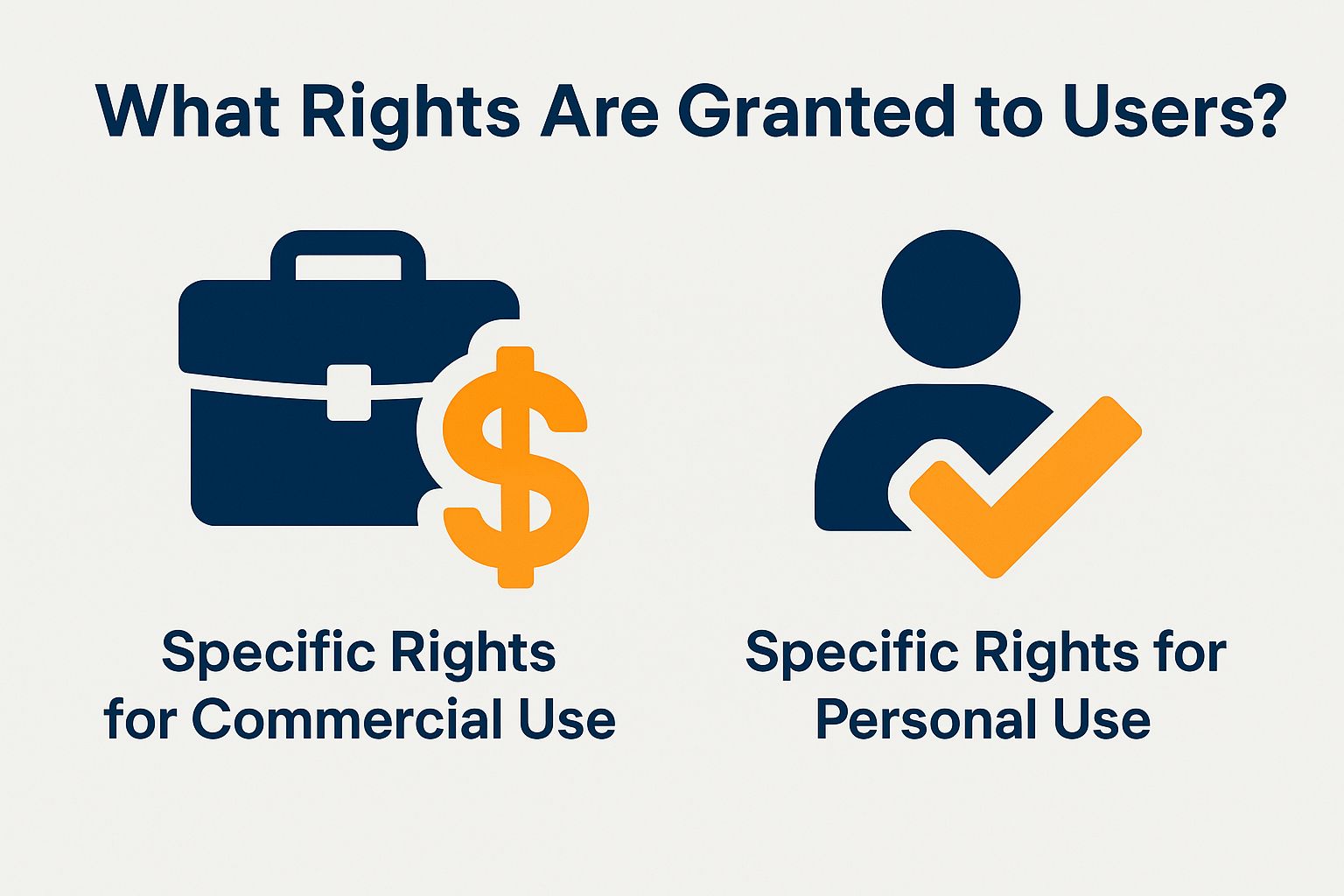
Commercial use of Soundverse music grants extensive rights, enabling distribution across platforms while ensuring compliance with licensing and copyright laws. This includes the capability to stream on services such as Spotify and Apple Music, which businesses can utilize to enhance their brand visibility.
For instance, a marketing agency may employ Soundverse tracks in promotional videos, ensuring that these are uploaded to their clients’ streaming accounts. Podcasts can also take advantage of these rights by incorporating the music into their episodes using digital audio workstations, thereby maximizing listener engagement while maintaining adherence to copyright laws.
By comprehensively understanding and leveraging these rights, companies can effectively elevate their audio branding and expand their reach to wider audiences.
Specific Rights for Personal Use
For personal use, Soundverse provides rights specifically designed for individual creators, thereby enhancing their capacity to enrich projects without any commercial implications, maintaining copyright protection.
With Soundverse, users are permitted to utilize music in personal videos, podcasts, or social media posts. However, it is essential to be aware of certain limitations.
- For example, monetizing creations-like using the music in monetized YouTube videos or sponsored content-may violate the license agreement.
- Additionally, sharing or redistributing the music outside of individual projects, even on platforms like Instagram or TikTok, is strictly prohibited.
Users must understand licensing terms for compliance and to avoid copyright issues.
Copyright Compliance Measures
Soundverse employs mechanisms to ensure copyright compliance, protecting creators and users within the music industry.
Monitoring and Enforcement Mechanisms
The platform’s monitoring mechanisms incorporate automated tools designed to track music usage across various channels, ensuring compliance with licensing agreements. Soundverse utilizes advanced technologies, including content recognition software, which scans video and audio platforms for unauthorized music usage.
Users receive real-time alerts through email or in-app notifications whenever a potential violation is detected.
Additionally, Soundverse implements a digital fingerprinting system that identifies copyrighted material by analyzing audio characteristics, thereby facilitating the maintenance of licensing agreements and copyright protection. Regular reports are generated to provide users with insights into their content’s compliance status, reinforcing proactive management of copyright requirements.
Differences Between Soundverse and Epidemic Sound
When comparing Soundverse to Epidemic Sound, significant differences in licensing terms and conditions become apparent, influencing how users can incorporate music into their projects.
Licensing Terms and Conditions
Soundverse’s licensing terms promote creativity while ensuring users understand their obligations, differentiating it from Epidemic Sound’s approach. Soundverse primarily adopts a one-time payment model for its licenses, granting users exclusive rights to their selected tracks.
This model allows users to utilize the purchased music without incurring ongoing fees, making it particularly suitable for projects with fixed budgets.
In contrast, Epidemic Sound operates on a subscription basis, providing users with access to a vast library of music, but requiring ongoing fees that correspond to the chosen subscription tier.
The decision between these models largely hinges on whether a project requires flexibility over time or if users prefer the certainty of a one-time payment.
Soundverse vs. Artlist
Soundverse and Artlist offer different pricing models, affecting how creators budget for music licensing and AI-generated compositions.
Pricing Models and User Flexibility
The pricing models of Soundverse and Artlist are tailored to their respective target audiences, with Soundverse providing greater flexibility in licensing options.
For example, Soundverse offers single-track licensing starting at $39, making it an ideal choice for independent creators. Additionally, their unlimited licensing is available for approximately $399 annually, catering to larger productions.
In contrast, Artlist utilizes a flat fee of $199 per year for unlimited downloads, appealing to filmmakers seeking a wide array of diverse, high-quality music. This creates a distinct choice for users: they can opt for Soundverse if they require specific tracks for individual projects, or select Artlist for broader needs across multiple projects without the concern of download limits.
Navigating Compliance Risks
Users must navigate compliance risks, as misusing music licenses can lead to legal consequences.

Common Pitfalls in Licensing
Misusing personal licenses for commercial projects can lead to copyright disputes. Another mistake is failing to read the license terms thoroughly, leading to unintentional violations. For example, some licenses allow streaming but not video synchronization.
Consult Soundverse’s licensing guide to understand specific usage rights. Contact their support team to clarify uncertainties before starting a project.
Staying informed and compliant significantly reduces the risk of legal challenges.
Advantages of Soundverse
Soundverse provides content creators with high-quality, royalty-free music for various projects.
Advantages Over Competitors
Soundverse stands out from competitors like Epidemic Sound and Artlist with its user-centric approach and innovative technology that enhances the creative process. This platform offers five key advantages:
- Access to an expansive library with over 250,000 tracks
- AI-driven personalized recommendations that boost user engagement by 30%
- Seamless integration with popular editing software
- A comprehensive licensing model that accommodates both commercial and personal projects
- Outstanding customer support, with an average response time of under 2 hours
Users consistently report that these features result in smoother workflows and greater creative flexibility, enabling quicker project turnaround times without compromising quality or human creativity.
FAQs about Soundverse and AI Studio
What is Soundverse’s licensing model?
Soundverse follows a subscription-based licensing model, where users can pay a monthly or yearly fee to access a library of copyright-free music and sound effects. This model is ideal for music producers and artists using AI tools like AI Studio to create innovative content. This model gives users the right to use the content in their projects without having to worry about copyright issues.
What rights do users have?
Users have the right to use the music and sound effects in their personal and commercial projects, as long as they are subscribed to Soundverse and comply with the terms and conditions. Whether you’re using AI-driven creativity or traditional methods, Soundverse supports your creative endeavors. This includes using the content in videos, podcasts, advertisements, and other media productions.
Difference Between Commercial and Personal Use
Personal use refers to using the music and sound effects in non-commercial projects such as personal videos, vlogs, or podcasts. Commercial use, on the other hand, involves using the content in projects that generate profit, such as advertisements, films, and corporate videos. Both types of use are covered under Soundverse’s licensing model.
How does Soundverse ensure compliance?
Soundverse works closely with content creators and copyright owners, including AI-assisted music production platforms like Runway ML and Amper Music, to obtain the necessary licenses for all the music and sound effects in its library. This allows users to use the content without any copyright concerns, aligning with the guidelines of the U.S. Copyright Office. Additionally, Soundverse regularly monitors its platform for any copyright infringements.
Soundverse Compared to Other Platforms
Unlike Epidemic Sound, which offers a mix of royalty-free and licensed music, Soundverse only provides royalty-free content that can be seamlessly integrated into AI-generated films and AI-powered filmmaking projects. This means that users do not have to worry about renewing licenses or paying additional fees for the use of the content. Artlist, on the other hand, offers a one-time payment for a perpetual license, while Soundverse follows a subscription-based model.
Can I cancel my Soundverse subscription?
Users can cancel their subscription anytime, ending their rights to use the content immediately. However, projects using AI music or AI-generated compositions created during the subscription can continue to benefit from that content. Projects created during the subscription can use the content without additional fees. Users must continue to comply with the content usage terms after canceling their subscription.
Leave a Reply