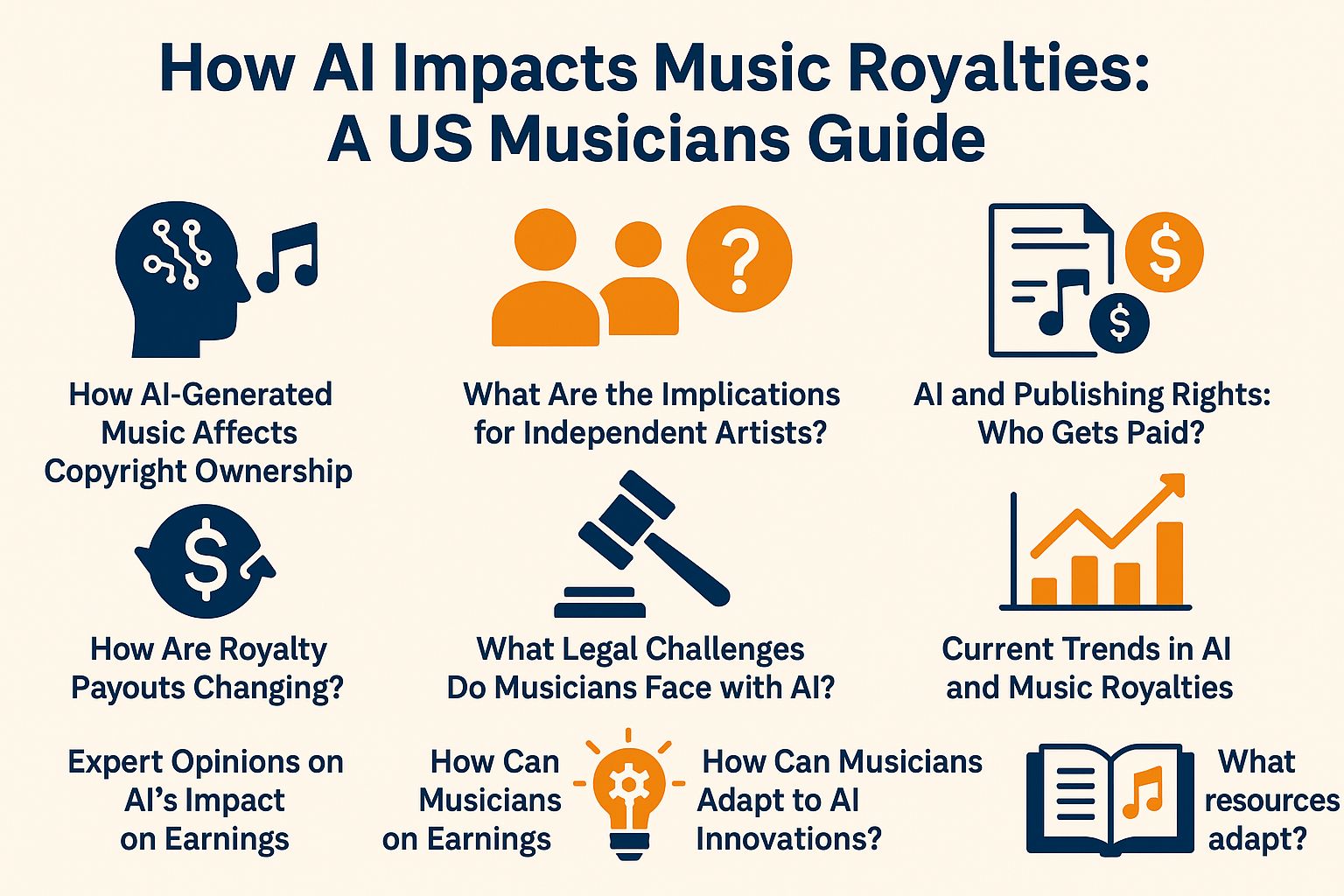
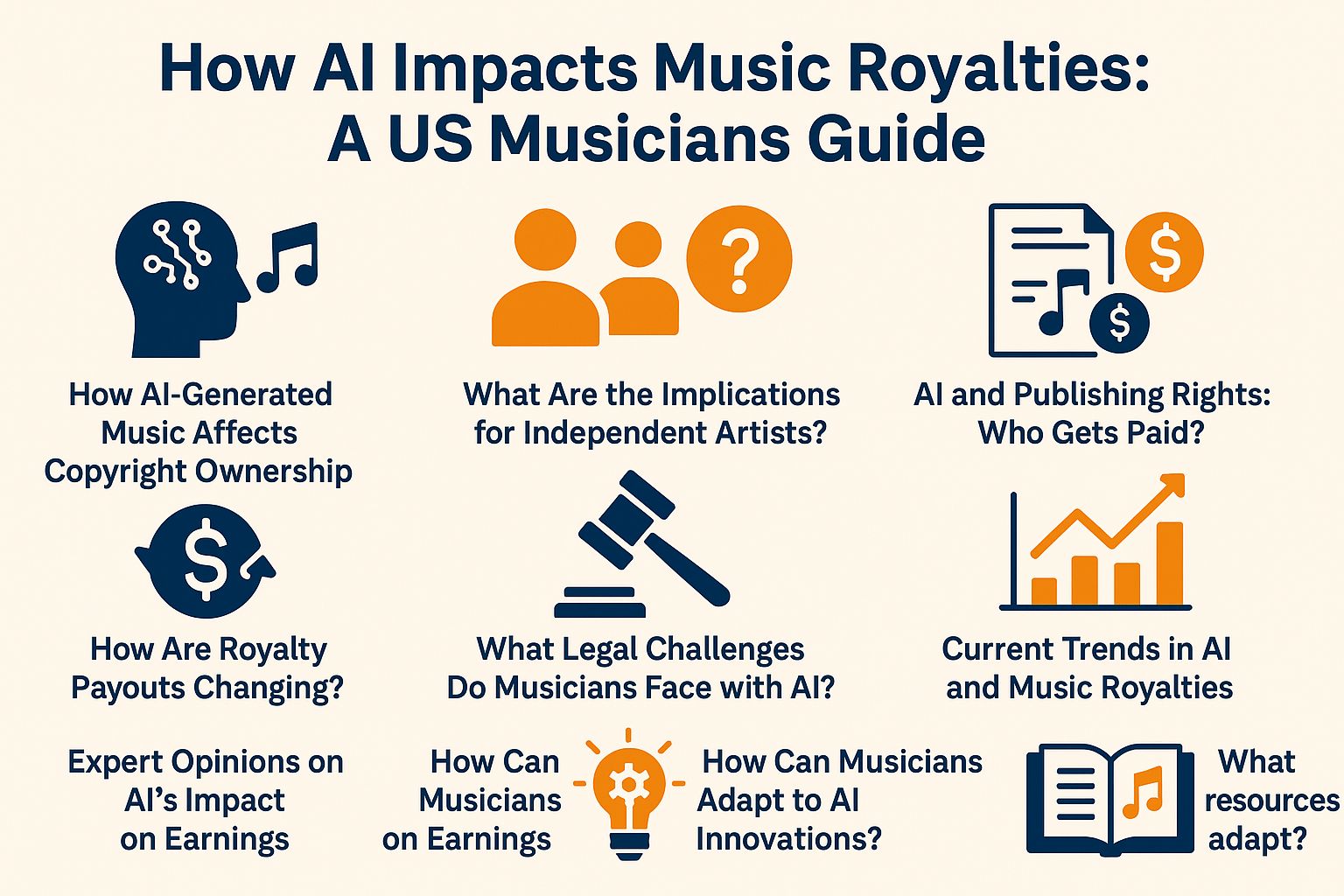
AI is reshaping the music industry, affecting how independent artists and producers calculate and receive royalties. This guide unpacks the complexities surrounding copyright issues, generative AI, and evolving royalty payouts, equipping you with insights to navigate this new landscape. By exploring expert opinions and current trends, we’ll help you understand the implications for your earning potential and advocate effectively for your rights in an AI-driven future.
Key Takeaways:
- AI-generated music raises copyright ownership questions in the industry.
- Independent artists must stay informed and adapt to changes in the music industry caused by AI technology.
- Royalty payouts and legal implications for musicians are evolving due to AI innovations, requiring a proactive approach from musicians.
AI-Generated Music and Copyright Ownership
Determining ownership of AI-generated music is challenging. Existing laws don’t clearly address non-human creators’ rights.
Understanding Ownership in AI-Created Works
The U.S. Copyright Office considers AI-generated work public domain without human authorship. Artists should document their contributions to AI projects.
Additionally, exploring licensing agreements that explicitly outline ownership terms can be beneficial. Consulting with legal counsel who specializes in digital rights can further help bridge the legislative gaps, ensuring that creators receive the necessary protection as technology continues to evolve.
Implications for Independent Artists
Independent artists face unique challenges and opportunities as AI reshapes music creation and distribution, impacting their revenue and visibility.
AI tools like Amper Music and AIVA allow artists to produce tracks without technical expertise, enhancing creativity. However, the influx of machine-generated music complicates revenue models, as an influx of machine-generated music saturates platforms, making it increasingly difficult for individual artists to distinguish themselves. To effectively leverage AI, artists should integrate these tools with their unique vocals or personal songwriting, thereby creating a distinctive sound that captivates listener interest.
AI and Publishing Rights
AI music generation is prompting a reexamination of traditional publishing rights and payment distribution.
The Role of Music Publishers in the AI Landscape
Music publishers are currently navigating a landscape where artificial intelligence significantly influences not only the creation of music but also the management of rights and royalties. To adapt effectively, it is crucial for publishers to focus on negotiating specific terms within their agreements.
Artists may pursue clauses that clearly define the ownership of AI-generated compositions, determining whether rights remain with the artist or revert to the publisher. It is essential for artists to advocate for transparency regarding the use of AI tools in the creation process, ensuring that royalties generated from AI works are distributed fairly.
Using tools like Songtrust helps track rights and fosters clear communication for better collaboration between publishers and artists.
Changes in Royalty Payouts
AI-generated music is changing royalty payouts, sparking discussions about fairness and transparency.
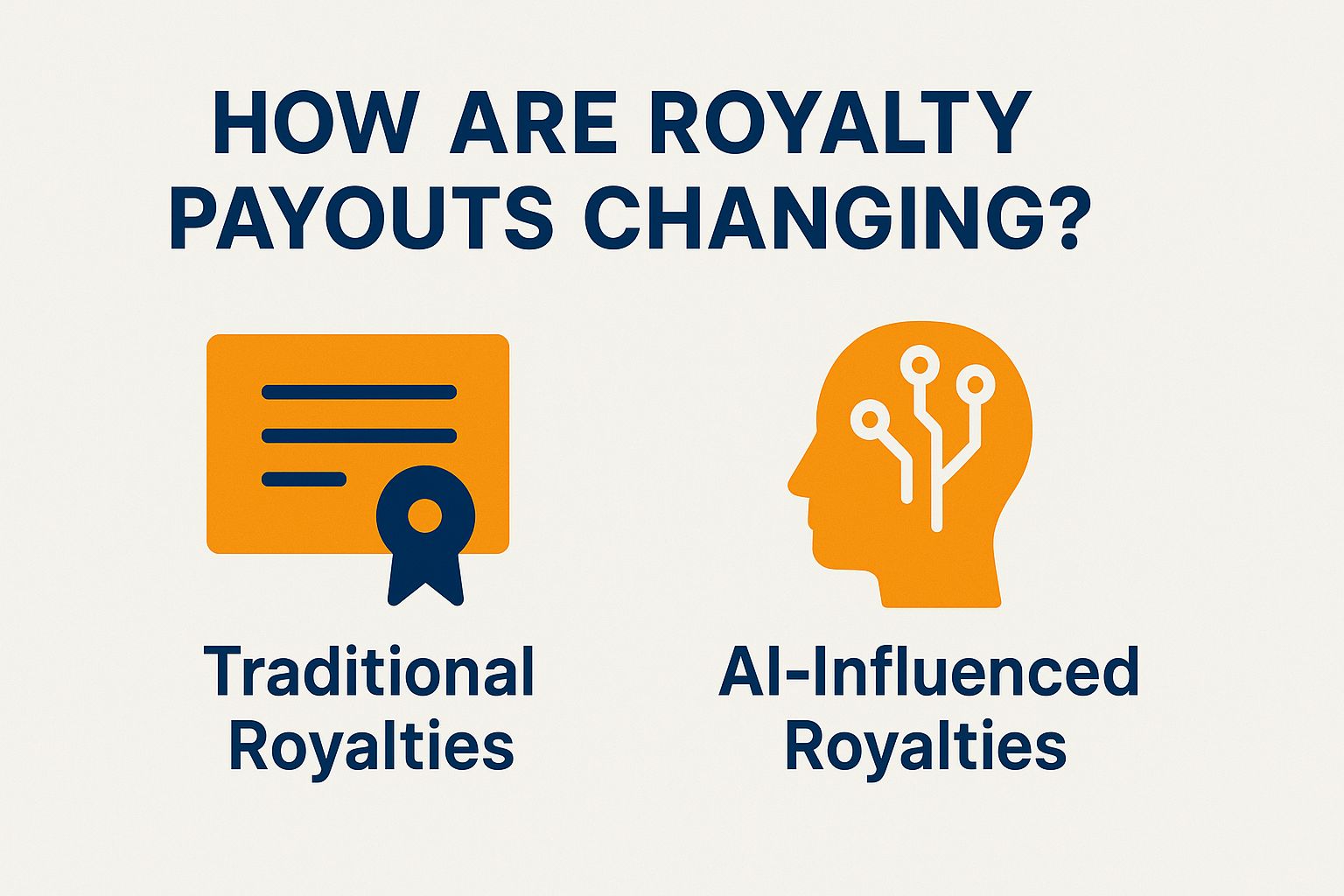
Traditional vs. AI Royalties
Traditional royalties range from 10% to 25% based on label and distribution deals. AI platforms can offer up to 70% due to lower costs.
For example, when an artist sells a digital album for $10 through a traditional label, the earnings may only amount to $1 to $2. In comparison, utilizing an AI platform for the same sale could result in earnings of $7.
Artists must evaluate options like rights management and potential earnings to make informed choices.
Legal Challenges for Musicians with AI
Musicians face legal challenges with copyright issues related to AI-generated music.
Copyright Infringement and AI
AI tools are causing more copyright infringement disputes, as seen in the ‘Blurred Lines’ case.
Musicians can take proactive measures to safeguard their interests by registering their songs with the U.S. Copyright Office, thereby ensuring legal recognition of ownership, a crucial step for preserving music ownership. Additionally, utilizing licensing agreements can provide clarity regarding how others may use their music. The implementation of tools such as DMCA Takedown services can facilitate the enforcement of rights and the prompt resolution of infringements.
By remaining informed about copyright laws and seeking legal counsel when necessary, artists can navigate the complexities of this evolving landscape more effectively.
Trends in AI and Music Royalties
AI is transforming royalty earnings and distribution, evolving traditional copyright methods. This guide explores AI’s impact on U.S. musicians’ royalties.
AI Case Studies in Music
Case studies of AI in music show both successes and challenges for artists.
For example, Taryn Southern used Amper Music to create an album with minimal training, showing AI’s role in music production. By utilizing Amper, she was able to generate original compositions, significantly reducing both production time and costs.
In a similar vein, the platform Aiva has enabled numerous artists to produce orchestral tracks suitable for film and gaming, demonstrating AI’s role in enhancing music catalogs. These innovations not only streamline the creation process but also have implications for royalty distribution.
AI-crafted tracks create new licensing opportunities and challenge traditional revenue models.
Expert Insights on AI’s Earnings Impact
Industry leaders provide insights on how AI is changing earnings for musicians.

Industry Leader Insights
Industry leaders express strong views on AI’s potential to disrupt music compensation. They highlight both risks and opportunities.
For independent artists, utilizing AI can significantly enhance earnings through platforms like DistroKid, which efficiently distributes music while allowing artists to retain 100% of their royalties.
Tools like Amper Music and AIVA help musicians create royalty-free tracks, expanding their creativity.
Industry expert Kevin Kelly recommends that artists adapt by concentrating on live performances and merchandise sales, as these revenue streams are less susceptible to the influence of AI.
Artists should diversify income sources and view AI as a complement to their artistry. This approach fosters sustainable careers and maintains audience trust.
Adapting to AI Innovations
Musicians must adapt to leverage AI for creative and financial benefits.
One effective method for integrating AI into music creation is through tools like Amper Music, which facilitates rapid composition without necessitating extensive musical training. Another noteworthy option is AIVA, an AI composer capable of generating unique pieces tailored to specific emotions or styles.
Staying informed about AI trends can also enhance creativity; subscribing to newsletters such as MusicTech and participating in webinars focused on AI in music can offer valuable insights.
By actively experimenting with these tools and resources, musicians can streamline their creative processes and explore new artistic avenues.
What Resources Are Available for Musicians Navigating AI?
Many resources help musicians navigate AI disruption and its effects on their craft and earnings. For those interested in exploring AI music creation, several platforms provide invaluable support, including investment opportunities in AI tools.
AI Music Labs offers workshops that address the impact of AI on creativity, while websites such as Sound on Sound feature tutorials on utilizing tools like Amper Music and AIVA. Additionally, enrolling in online courses from platforms like Coursera or Skillshare can enhance one’s understanding of generative AI and music licensing.
These resources not only instruct users on the application of AI software but also facilitate discussions on ethical considerations, cultural significance, and copyright issues, which are essential in today’s evolving music landscape marked by technological reckoning.
AI’s Impact on the Music Landscape
AI will significantly shape the future of music, transforming creation, consumption, streaming, and monetization.
AI’s influence on the music industry is expected to drive substantial changes in copyright laws, artist rights, and royalty distributions through smart contracts. For example, as algorithms and AI models increasingly generate original content, there is likely to be a push for revised legislation on intellectual property that more clearly defines ownership rights.
Emerging technologies, such as blockchain technology, could facilitate transparent royalty payments and identity verification, ensuring that creators receive fair compensation for their work. It is essential for artists to proactively engage with these developments, remaining informed about legal changes and technological advancements to protect their rights while adapting their marketing strategies to thrive in an AI-driven landscape. This involves collaboration with policymakers and leveraging streaming services like Spotify and Tencent.https://www.youtube.com/embed/3I9dnxzjEzg
Frequently Asked Questions
How does artificial intelligence impact music royalties for US musicians?
AI is transforming how music royalties are earned and distributed. With AI-generated music and automated recognition, traditional copyright methods are evolving. This guide explores AI’s impact on music royalties for US musicians, focusing on licensing and financial planning.
AI-Generated Music and Copyright Ownership
AI-generated music is created using algorithms and machine learning without human involvement. This raises questions about copyright ownership since AI systems aren’t ‘authors’ under US law. As a result, the AI system owner may hold the copyright, impacting royalties for musicians.
Impact of AI on Publishing Rights
Publishing rights allow distribution and sale of music. AI-generated music lacks a human creator, meaning rights may belong to the AI system’s owner rather than the musician, leading to loss of control and earnings.
Current Trends in AI Music and Royalties
AI in music is emerging, creating personalized music and potentially increasing royalties. However, concerns about imitation and copyright infringement persist.
Legal Implications of AI for Musicians
With the rise of AI music, legal issues arise for musicians. If an AI creates a song that infringes on existing copyright, who is accountable? This raises liability questions for creators and users of AI music, emphasizing the need for careful licensing.
Will AI Replace Musicians and Affect Earnings?
Despite concerns about AI replacing musicians, it cannot replicate human creativity and emotion. US musicians should stay informed about AI’s industry impact and adapt strategies to earn royalties, including exploring digital music and smart contracts.
Leave a Reply