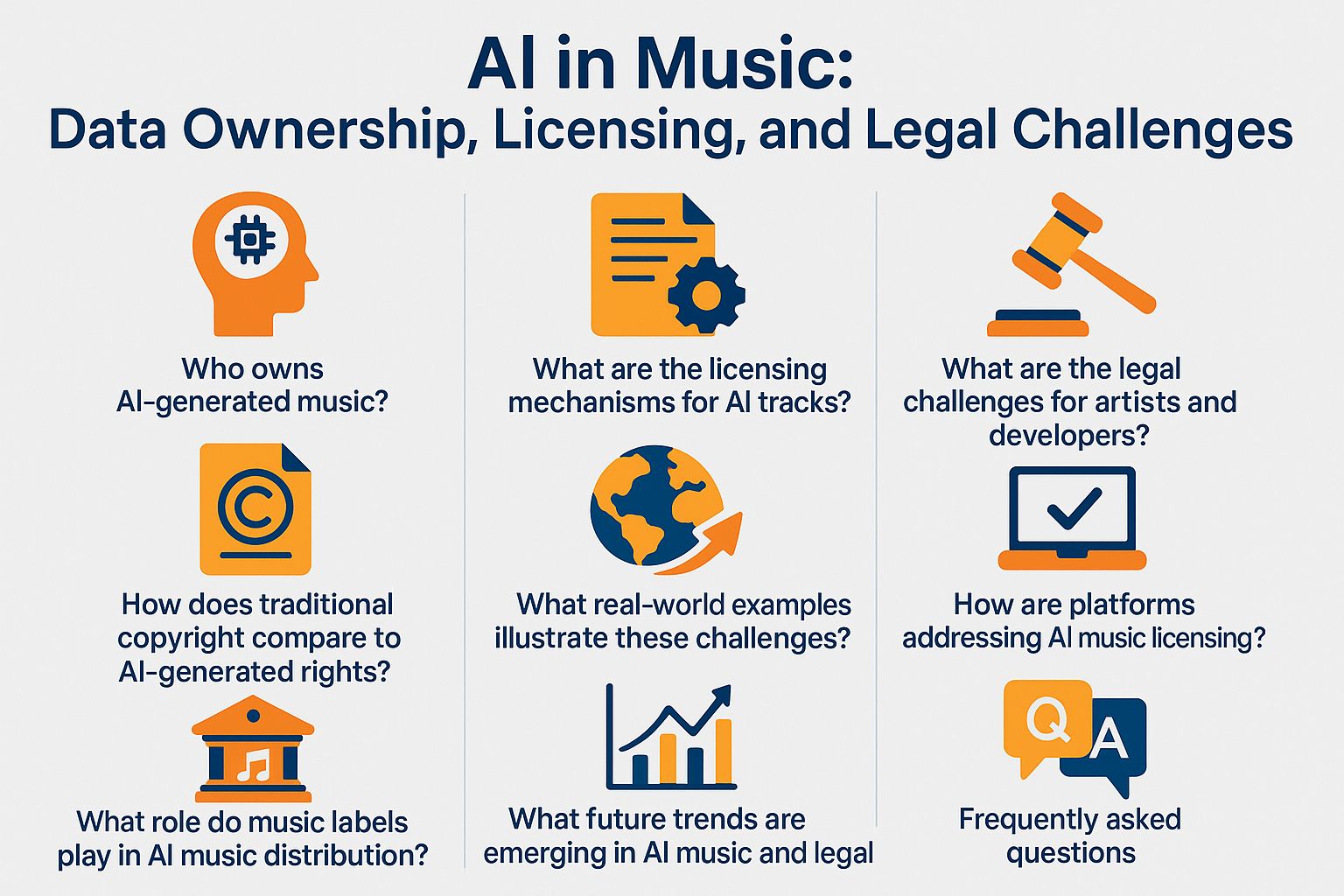
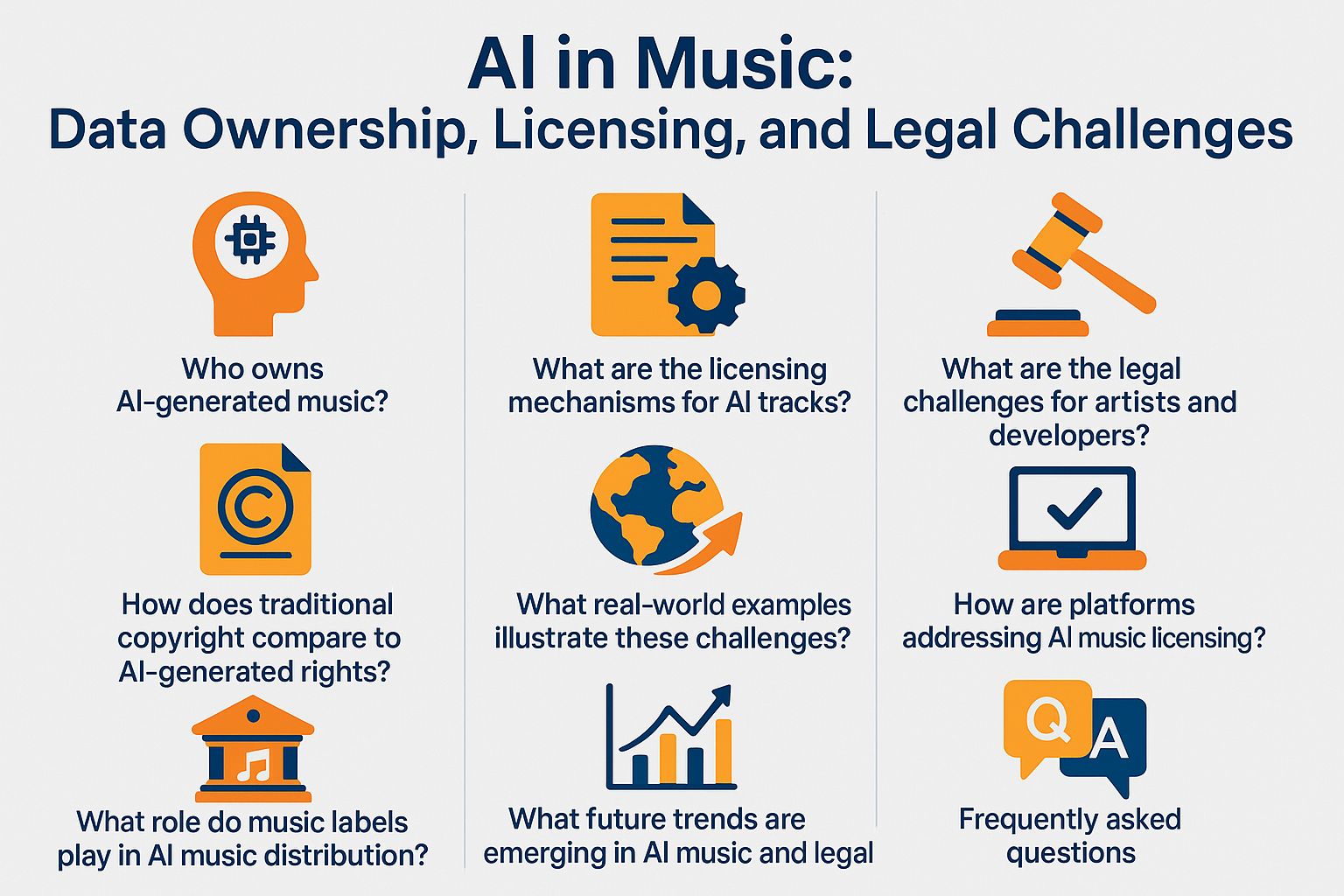
As technology and creativity evolve, questions about AI-generated music ownership and copyright arise. Industry giants like Paul McCartney and Elton John explore AI soundscapes, while organizations like GEMA adapt to these changes. Understanding the nuances of music licensing and creative control and the legal challenges faced by artists and developers is crucial. This article clarifies ownership rights, compares traditional copyright with AI-generated rights, and highlights real-world examples for insights.
Key Takeaways:AI music and AI-generated content are transforming the music industry and copyright law.Defining ownership in AI creation is a key challenge in the music industry, as it blurs the lines between human and machine contributions.The current licensing mechanisms for AI-generated music are still evolving, with key models such as royalty-free and subscription-based licenses being utilized.Legal challenges faced by artists and developers, such as AI Voice Corp and VocaliD, include intellectual property issues and disputes over ownership and rights management, underscoring the need for clear regulations in AI music.
Ownership in AI Music
AI-generated music ownership poses significant questions, especially since the U.S. Copyright Office does not recognize AI as a legal creator, affecting compensation mechanisms for creators.
This lack of recognition complicates the landscape for rights attribution in this emerging field.
Defining Ownership in AI Creation
Defining ownership in AI-generated music is complex, raising questions about creators’ rights versus AI tool developers. Music rights organizations, including GEMA, assert that ownership typically resides with the original creator, as emphasized in cases like the GEMA lawsuit against AI developers. However, the introduction of AI-generated music complicates these boundaries.
For example, when an artist inputs specific samples into an AI tool, questions emerge about whether the artist retains rights to the generated output or if the developers of the tool possess any claims.
To navigate these complexities, it is advisable for artists to meticulously document their input and creation process, employing agreements that clearly outline ownership from the outset. This proactive approach protects creators in the evolving AI-generated content landscape.
Current Licensing Mechanisms for AI Tracks
The licensing landscape for AI-generated tracks is changing, adapting traditional models to fit AI compositions.
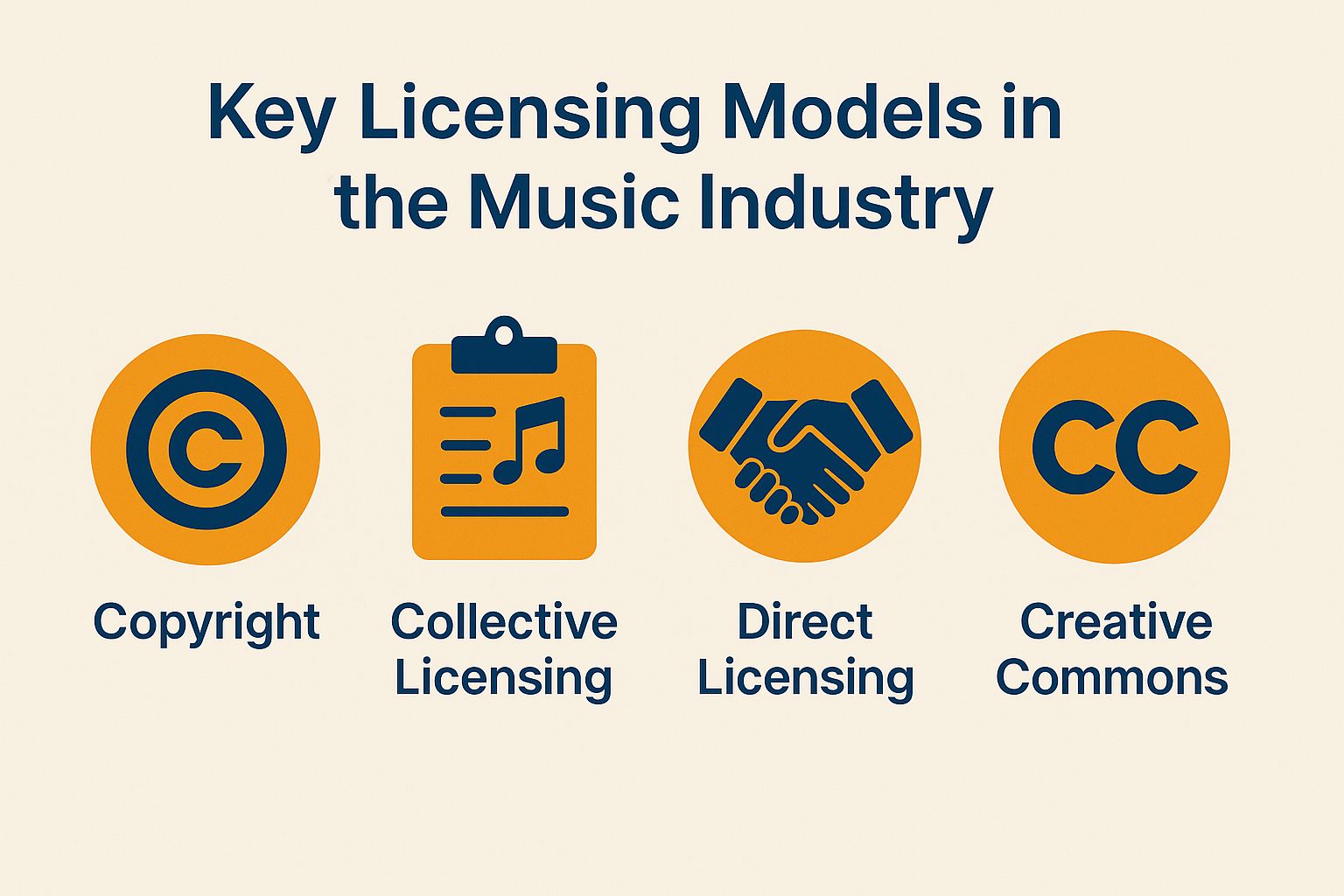
Key Licensing Models in the Music Industry
Key licensing models include traditional methods, like mechanical licenses, which adapt for AI-generated content. These adaptations underscore essential distinctions between AI-generated music and that created by human composers.
Mechanical licenses, which cover physical reproductions, require careful consideration of ownership rights, particularly when the creator is an AI.
For example, when an AI generates music using existing copyrighted samples, the original creators typically retain their rights, thereby necessitating synchronization licenses. A significant case illustrating this is OpenAI’s Jukebox, which has prompted discussions regarding performance licenses, as the AI emulates the styles of well-known artists.
Understanding these nuances is vital for creators as they navigate the evolving landscape of music licensing.
Legal Challenges for Artists and Developers
Artists and developers face legal challenges in AI music, especially copyright and intellectual property issues.
Intellectual Property in AI Music
AI music raises disputes over ownership of melodies and lyrics, complicating copyright enforcement. An example of this complexity can be observed in a case involving the AI music generator “Creativity Machine,” which raised pertinent questions about the rights to the songs it produces, similar to the questions raised by Zarya of the Dawn and Suno platforms.
Artists using this technology face challenges claiming copyright, as current laws do not address AI-created works. This ambiguity has resulted in concerns regarding potential legal action from traditional copyright holders. A notable instance of this is reflected in a recent lawsuit where a record label contested the use of AI-generated music in a compilation album.
To navigate these dilemmas, artists may need to consider engaging in creative commons licenses or establishing clear contractual agreements to protect their interests.
Copyright vs. AI-Generated Rights
The comparison between traditional copyright and AI-generated rights highlights significant disparities in the definitions and enforcement of ownership and rights management.
Ownership and rights management differ between traditional and AI-generated music due to unrecognized authorship in AI.
Differences in ownership and rights management between traditional music and AI-generated music arise from the lack of recognized authorship in AI creations. In traditional music production, rights are typically assigned to human authors, granting them control over the distribution and reproduction of their work.
For example, established artists such as Taylor Swift maintain ownership of their songs, which enables them to negotiate licensing deals effectively.
In contrast, the domain of AI-generated music, such as tracks produced by OpenAI’s MuseNet, presents challenges regarding rights allocation. Recent legal cases, including those involving copyright claims on AI-generated art, underscore the ambiguity surrounding the ownership of these works.
Consequently, creators and platforms must navigate an evolving legal landscape to clarify ownership rights and ensure compliance with existing laws.
Legal Challenges: Real-World Examples
Real-world examples of AI-generated music show legal disputes faced by the industry, including lawsuits involving platforms like YouTube.
These cases underscore the complexities and evolving nature of copyright issues in the context of artificial intelligence and music creation.
Case Studies of AI Music and Legal Disputes
Case studies of AI-generated music highlight significant legal disputes, illustrating the complexities of copyright infringement in the era of generative AI. A notable example is the song “A.I. Love” by artist Holly Herndon, who trained her AI model, Spawn, using her own voice. Following its release, Herndon encountered potential legal challenges concerning copyright ownership.
Additionally, tools such as Amper Music and Jukedeck, which facilitate AI music creation, have sparked ongoing debates regarding intellectual property rights. Artists should prioritize clear contracts and licensing agreements for AI-generated materials to protect ownership rights and ensure transparency with developers in order to mitigate potential disputes in the future.
Platforms and AI Music Licensing
Platforms are swiftly innovating to navigate the intricate landscape of AI music licensing, adapting their existing frameworks to effectively address emerging challenges.
Licensing Innovations for AI Music
New technologies streamline AI music licensing for creators.
Platforms like Amper Music and AIVA transform music licensing. For example, Amper enables users to create custom music tracks while efficiently managing rights, whereas AIVA allows composers to generate music tailored to specific genres, thereby simplifying the licensing process.
These tools not only save time but also mitigate legal complexities, allowing artists to concentrate on their creative endeavors. Services like DistroKid facilitate the distribution of AI-generated music, ensuring that developers can effectively monetize their content.
By leveraging these innovations, creators can enhance their productivity and significantly reduce licensing challenges.
Music Labels in AI Music Distribution
Music labels play a vital role in the distribution of AI-generated music, partnering with developers and creators to effectively navigate the evolving landscape of music rights.
Label and AI Developer Collaboration
Collaboration between music labels like Sony Music Entertainment and AI developers is crucial for the creation of compliant and marketable AI-generated music. A notable partnership exists between Universal Music Group and OpenAI, resulting in the development of AI music platforms that adhere to licensing agreements.
These collaborations involve the utilization of AI tools to generate compositions that imitate well-known styles while ensuring that original rights holders receive appropriate compensation.
Additionally, Warner Music Group has formed partnerships with startups like Endel to create personalized soundscapes, effectively blending AI technology with user preferences, similar to initiatives by AI Voice Corp. This approach not only enhances distribution efficiency but also opens new revenue streams.
Such strategies exemplify how music labels can innovate while successfully navigating complex legal frameworks.
Future Trends in AI Music
Trends in AI music and legal frameworks show a push for clearer regulations and ownership structures. including the recent GEMA lawsuit discussions, indicate a movement towards more defined regulations and clearer ownership structures for AI-generated works.
This evolution is essential for establishing rights and responsibilities in the rapidly changing landscape of artificial intelligence in the music industry, where technological innovation continues to advance.
Changes in AI Copyright Law
Anticipating changes in copyright law and licensing is essential for stakeholders in the AI music sector as they prepare for a more regulated environment. Experts predict that stricter regulations related to the use of copyrighted material in AI-generated music may significantly impact artist compensation models. For example, the Copyright Office has proposed revising the Fair Use doctrine to better address the complexities of AI-generated creations.
Stakeholders should adopt proactive strategies like:
- Developing licensing agreements specifically designed for AI work,
- Utilizing rights management tools like RightsTrack, and
- Staying informed through resources from organizations like the American Music Rights Association.
These initiatives will not only help safeguard intellectual property but will also promote fair compensation as the landscape continues to evolve.
FAQs
1. Who owns AI Music Rights?
The ownership of AI-generated music is a complex issue that is still being debated in the legal world. Generally, the creators of the AI algorithm, whether it be a company or an individual, hold the copyright to the music produced by the AI. However, this can vary depending on the specific circumstances and agreements between the parties involved.
2. Licensing for AI Tracks
Licensing for AI tracks resembles traditional music licensing. The creator of the AI algorithm would need to obtain the necessary licenses for any copyrighted material used in the creation of the music. This could include samples, lyrics, or melodies from other artists. Additionally, the creator may also need to obtain a license for the use of the AI itself, depending on the terms of use set by the AI developer.
3. Legal Challenges for AI Music
A major challenge is determining rights and fair compensation. This can become even more complicated when multiple creators and developers are involved in the production of the music. Additionally, there are concerns over potential copyright infringement and the need for clear guidelines and regulations for the use of AI in the music industry.
4. Copyright Protection for AI Music
Yes, AI music can receive copyright protection. As long as the music meets the requirements for originality and creativity, it can be considered a work of authorship and eligible for copyright protection. However, the ownership and rights to the music may still be disputed and need to be determined through legal agreements.
5. Examples of AI Music and Legal Issues
An example is Taryn Southern’s AI album, “I AM AI.” The album was created entirely using AI, leading to discussions about the ownership of the music and whether the AI can be considered the sole creator. Another example is the AI-generated song “Daddy’s Car” by the company OpenAI, which raised questions about copyright and licensing for the use of the AI platform.
6. AI Music and Traditional Rights
AI music presents unique rights and ownership challenges due to non-human creators. Unlike traditional music, where the rights and ownership are typically straightforward and clear, AI music requires more careful consideration and negotiations between all parties involved. It also brings up questions about the role of human creativity in the music industry and how it may be impacted by the rise of AI technology.
Leave a Reply